The lanyard is one of the most familiar objects in any workplace, school or event, but it has a longer and more interesting history than most people realise. Here are eight facts about lanyards, from their origins to the way they are made today.
1. The word comes from French
“Lanyard” comes from the French lanière, meaning a strap or thong. The English spelling changed over the centuries, probably influenced by the word “yard”, the spar on a ship’s mast.
2. Sailors used them long before office workers
On sailing ships, a lanyard was a short rope used to secure rigging or to tie down tools and equipment so they wouldn’t be lost overboard. The name is still used for ropes and cords on boats today.
3. Soldiers used them to keep hold of essentials
Armies used lanyards to attach whistles, pistols and other kit to a uniform, so it couldn’t be dropped in the heat of action. Some military uniforms still feature a braided lanyard on the shoulder, often in a colour that signifies a unit or role.
4. Their core job hasn’t changed
Whether it holds a whistle, a sword or an ID card, a lanyard does the same thing: keeps something important within reach and stops it getting lost.
5. Lanyards can be safety devices
Some machines, such as boats, jet skis and treadmills, use a kill-cord lanyard attached to the user. If the user falls, the cord pulls free and the machine stops. Neck lanyards have their own safety feature: a breakaway clip that releases if the strap is pulled.
6. Colour carries meaning
From military shoulder cords to modern workplaces, lanyard colour has long been used to show who someone is. Schools, hospitals and events use colour-coded lanyards to separate staff, visitors and contractors at a glance.
7. They are made from many materials
Lanyards have been made from rope, leather, cord, silk and cotton. Today, most are polyester or nylon, alongside satin, and eco options such as recycled PET from drinks bottles, bamboo fibre and organic cotton.
8. Modern printing allows almost any design
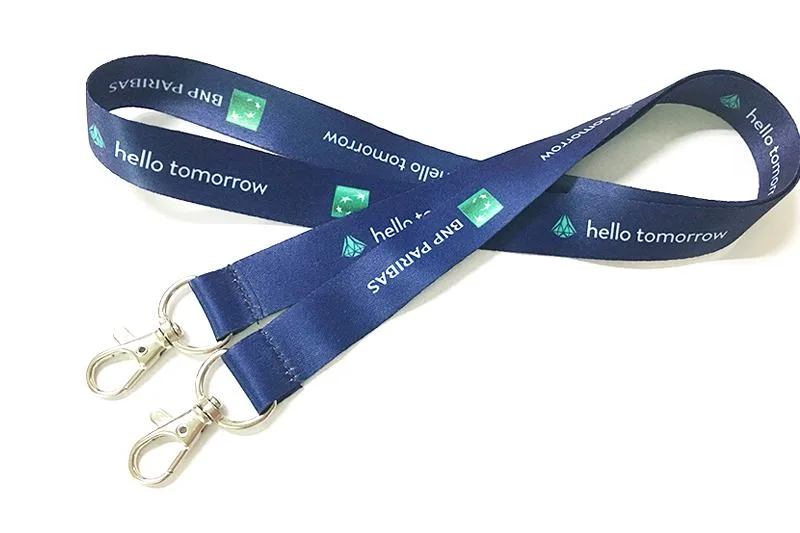
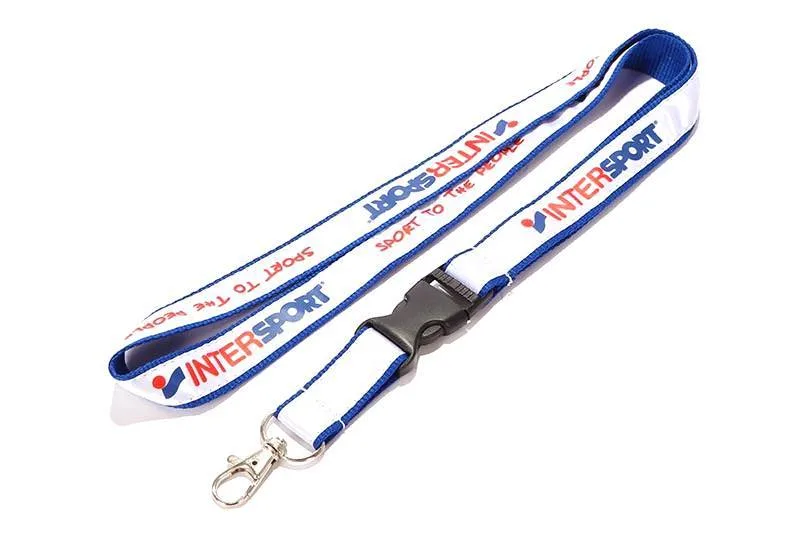
Early printed lanyards were limited to one or two flat colours. With dye sublimation, the ink is bonded into the fabric, so a lanyard can carry unlimited colours, gradients and photos on both sides. For a premium look, woven lanyards stitch the design into the ribbon so it can never wear off.
Make your own piece of lanyard history
Today a lanyard is one of the most visible ways to show your brand. Design your own lanyard online or get a free quote. We reply within 30 minutes during working hours and deliver free across the UK.